With a clear understanding of your preferences, we'll create your project using computer-assisted design software (known as CAD). You receive an in-depth demonstration and tour of your bespoke design and a comprehensive quotation for your review with transparent costing.
- DESIGNED, SUPPLIED & INSTALLED BY ONE AWARD-WINNING TEAM

The Hidden Cost of a Cheap Kitchen
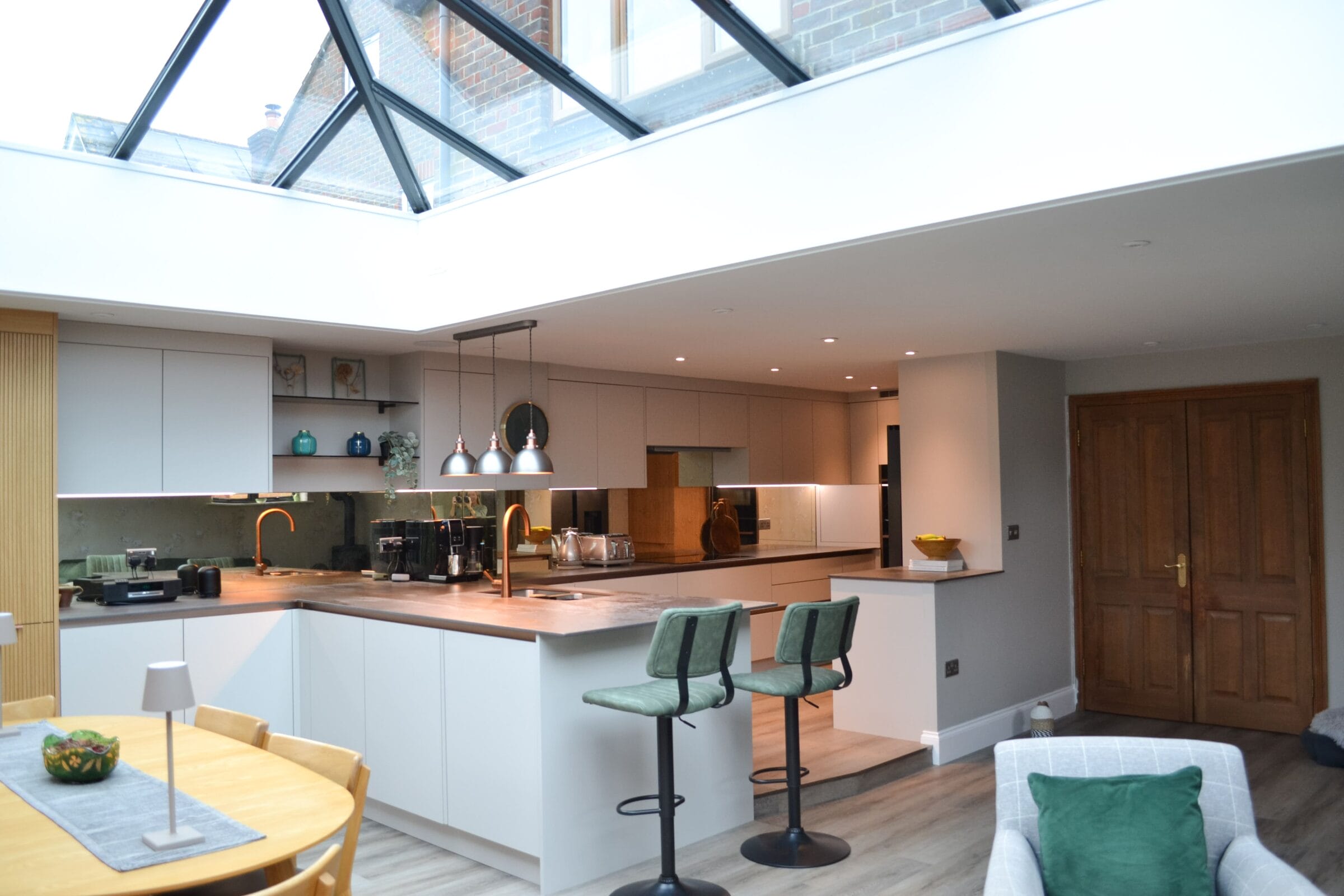
There is a calculation that most kitchen retailers would prefer you not to make. It goes something like this: a cheap kitchen costs less on the day it is installed, but a well-specified kitchen costs less over the decade or two you actually spend living with it.
The upfront price is the figure that gets quoted and compared. The real cost sits behind it, in what happens five, eight, or ten years down the line when the finish starts to go, the hinges give out, and the carcasses begin to show the effects of daily use. That is the cost nobody mentions at the point of sale.
At Kitchen Living, we design and install kitchens that are built to last. The clients who come to us are rarely making a snap decision on price - they are thinking about the long term. This article lays out why that approach almost always makes better financial sense.
The Replacement Cycle Nobody Puts in the Brochure
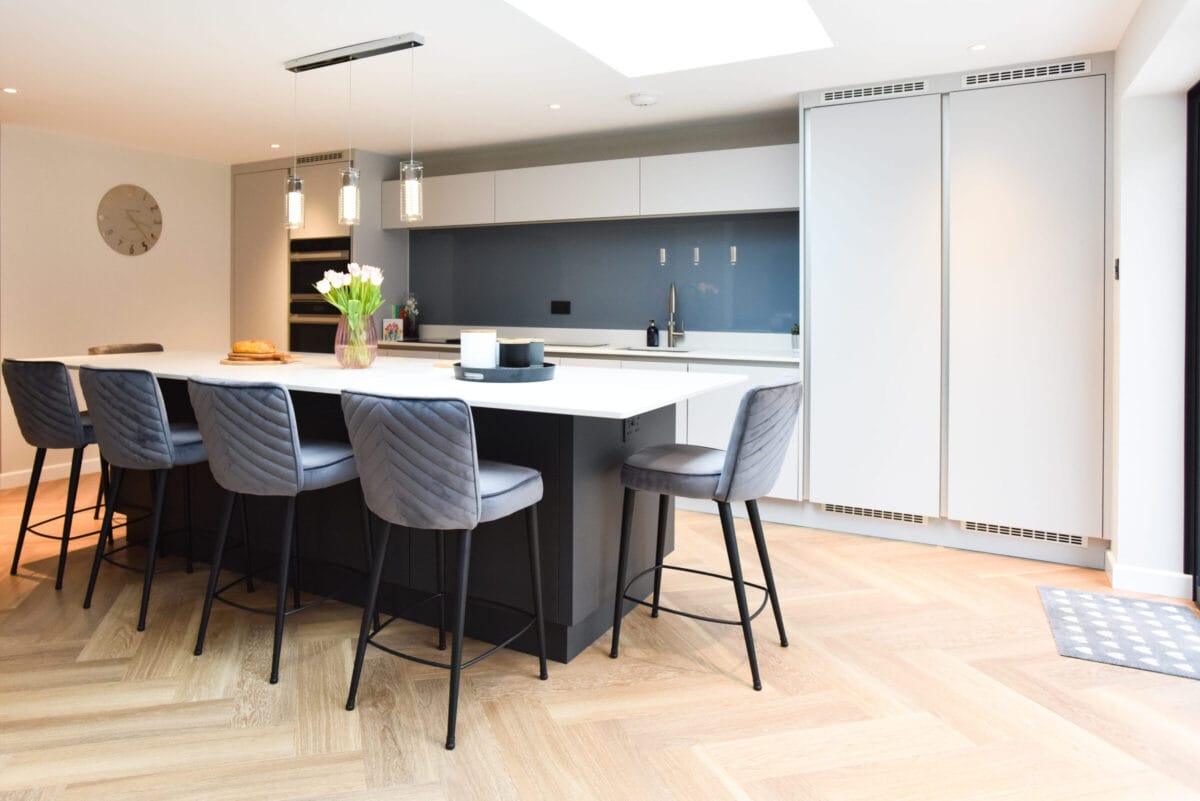
Volume kitchen manufacturers operate in a world shaped by retail price points. To hit those price points, compromises are made in the places a buyer is least likely to inspect: the quality of the carcass material, the specification of the hinges and drawer runners, the thickness of the doors, the durability of the finish. None of this is obvious on the showroom floor. It becomes obvious later.
The typical lifespan of a budget kitchen is somewhere between eight and twelve years before the problems become too widespread to ignore. Foil-wrapped door edges start to lift. MDF carcasses swell where moisture gets in around the sink or dishwasher. Soft-close hinges stop closing softly. Drawer runners begin to stick. Painted finishes chip and cannot be touched up because the original colour was never recorded.
By this point, the kitchen is rarely worth repairing piece by piece. The economics of it don’t stack up, and so the whole thing comes out. Another kitchen goes in. The cycle starts again.
A well-specified kitchen, installed with quality cabinetry and properly finished, is designed to last twenty years or more. The upfront cost is higher. The lifetime cost is considerably lower.
The Real Price of Starting Again
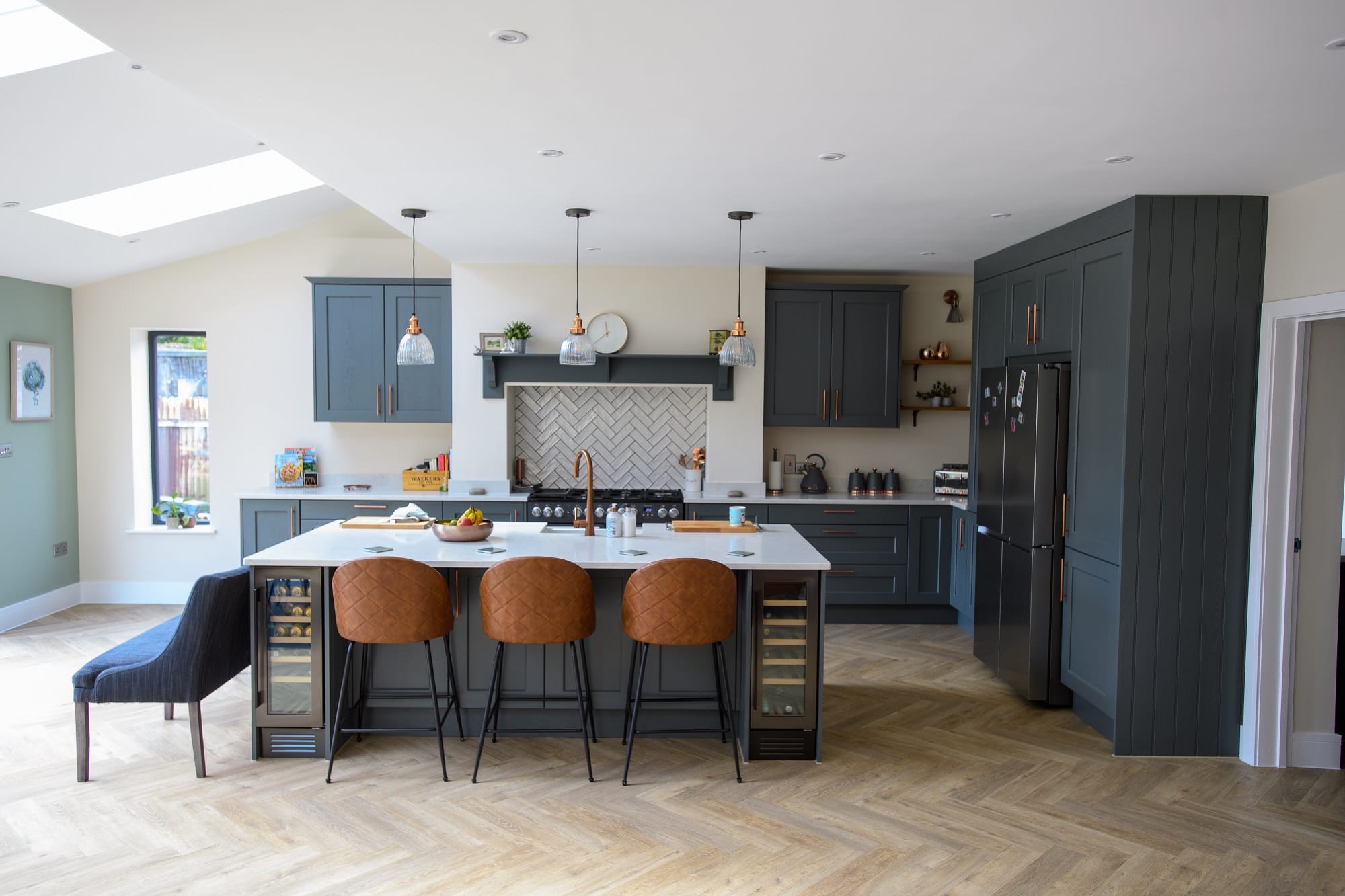
When people think about replacing a kitchen, they tend to think about the cost of the new kitchen. That is only part of the bill.
A full kitchen renovation means stripping out the old units, which often causes damage to the walls and floor behind and beneath them, which can mean replastering. It almost always means living without a functioning kitchen for several weeks, which has its own practical and financial implications for a household.
Then there are the appliances. A kitchen replacement often triggers appliance replacement at the same time, not because the appliances have failed, but because they no longer fit the new layout or the new aesthetic. That is another layer of cost that was not part of the original calculation.
Work through the numbers across a twenty-five year period. A homeowner who fits a budget kitchen twice in that window, along with all the associated works, will almost always have spent more than they would have paid for a quality kitchen fitted once. The comparison shifts further still if a third replacement is required.
What Quality Actually Means in a Kitchen
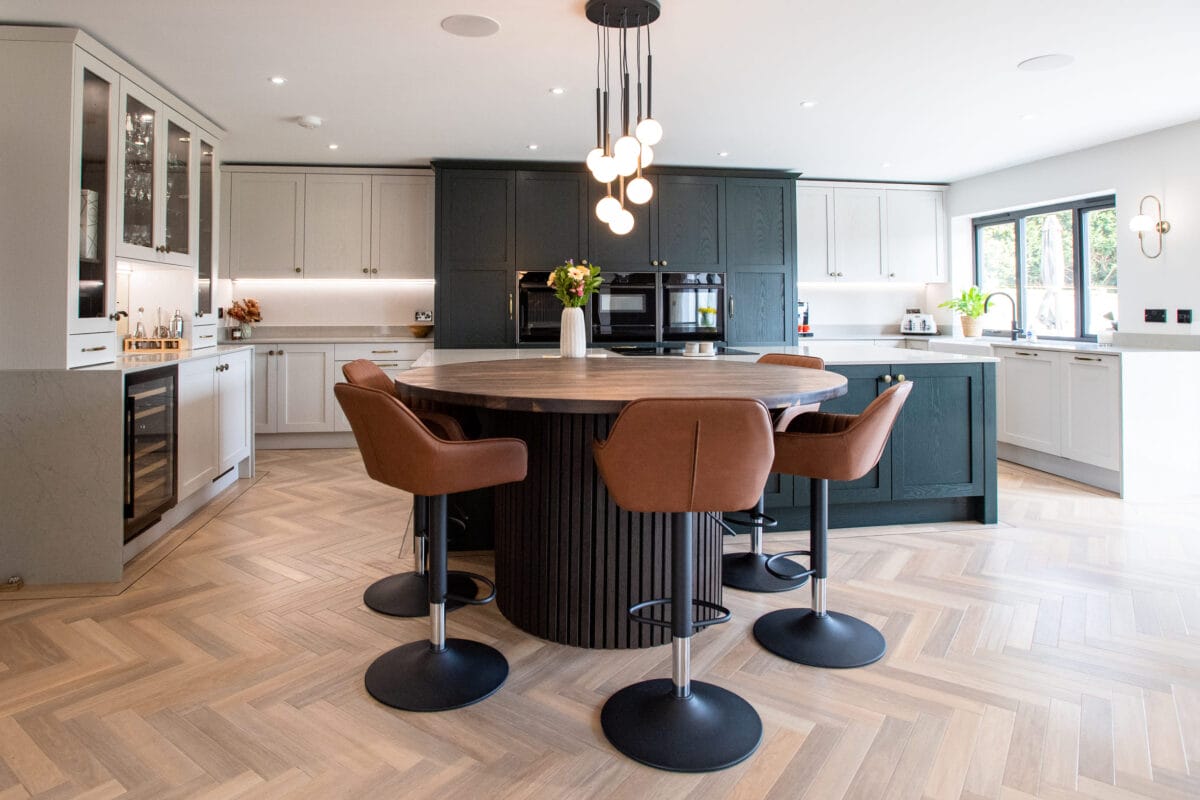
It is worth being specific about where quality makes the most practical difference, because the conversation around premium kitchens can sometimes focus too much on the aesthetic and not enough on the construction.
Carcass material is the foundation of everything. Budget kitchens are largely built from MDF, a material that performs well in dry conditions but is vulnerable to moisture over time. The kitchens we install at Kitchen Living are specified with carcasses that are built to withstand the demands of daily use in a room where water is present every day. The difference in longevity is significant.
Hardware is another area where the gap between budget and quality becomes apparent over time. A hinge or drawer runner on a cheaper kitchen might carry a five-year guarantee. The hardware we specify is built for decades of daily use. Over the course of twenty years, opening a drawer a dozen times a day, that difference is not a minor detail.
Finish quality matters too, and not just for appearance. A properly applied finish on a well-made door is more resistant to knocks, heat, and moisture than a factory-sprayed finish on a cheaper door. It also ages more gracefully. The kind of kitchen that still looks good ten years after installation is not an accident. It is the result of how it was specified.
The Daily Cost of a Kitchen That Does Not Quite Work
There is another cost that sits alongside the material one, and it is harder to put a number on. It is the cost of using a kitchen that was never properly designed for the space it sits in.
Budget kitchens are modular systems. They come in standard sizes, and your room is adapted to accommodate them rather than the other way around. In a straightforward rectangular kitchen this can work well enough. In a room with any kind of character, an awkward corner, a chimney breast, a non-standard ceiling height, or a layout that does not follow a simple run, the compromises become part of everyday life. Filler panels where there could be storage. Corners that are technically accessible but practically useless. A layout that forces unnecessary steps between the hob, the sink, and the worktop.
A kitchen designed specifically for your home and the way you cook eliminates those frictions from the start. Over the years you spend using it, that is worth a great deal.
Why a Quality Kitchen Adds Value to Your Home
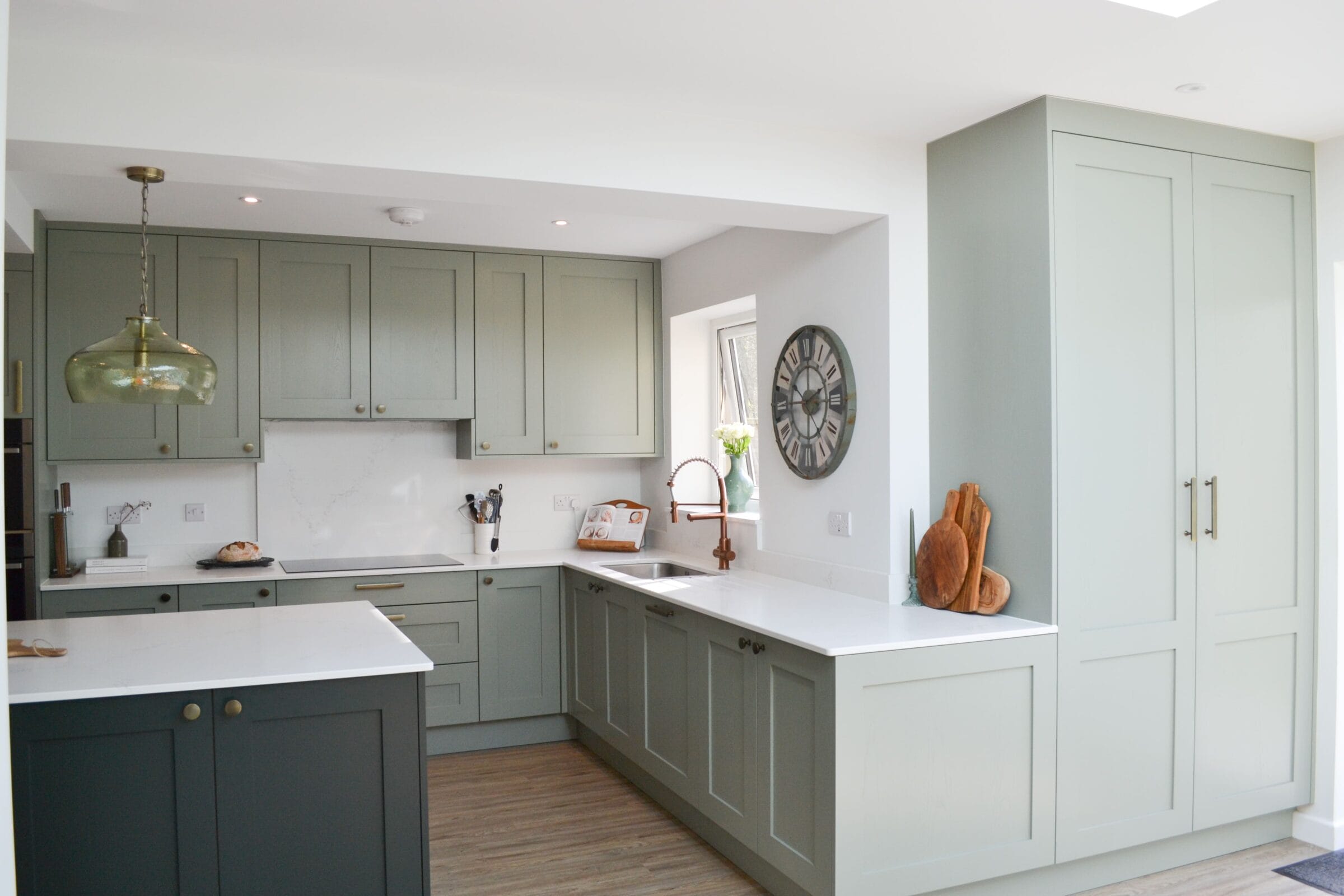
A well-designed, well-installed kitchen is one of the most effective ways to add value to a property. Estate agents consistently identify the kitchen as one of the rooms that most influences a buyer’s decision, and a kitchen that is visibly high quality, well laid out, and clearly built to last makes a different impression from one that is showing its age.
In the Hampshire market, this is particularly relevant. Buyers at the upper end of the market expect the kitchen to reflect the quality of the rest of the property. A kitchen that falls short of that expectation can affect both the perceived value of the house and the speed of a sale.
A cheap kitchen that needs replacing rarely adds value at all. It can actively detract from it.
The Environmental Argument for Getting It Right First Time
Replacing a kitchen generates a considerable amount of waste. The old units, worktops, and fittings largely end up in landfill. The manufacturing energy, transport, and materials that went into them are gone. A replacement kitchen then goes through the same process again.
A kitchen that is installed once and lasts twenty-five years is, in practical environmental terms, the better choice. The most sustainable kitchen is simply one that does not need replacing. Longevity and sustainability are, on this point, the same thing.
What This Means in Practice
We are not suggesting that every kitchen project requires an unlimited budget. What we are suggesting is that the question to ask is not just what a kitchen costs to buy, but what it costs to own over the years you live with it.
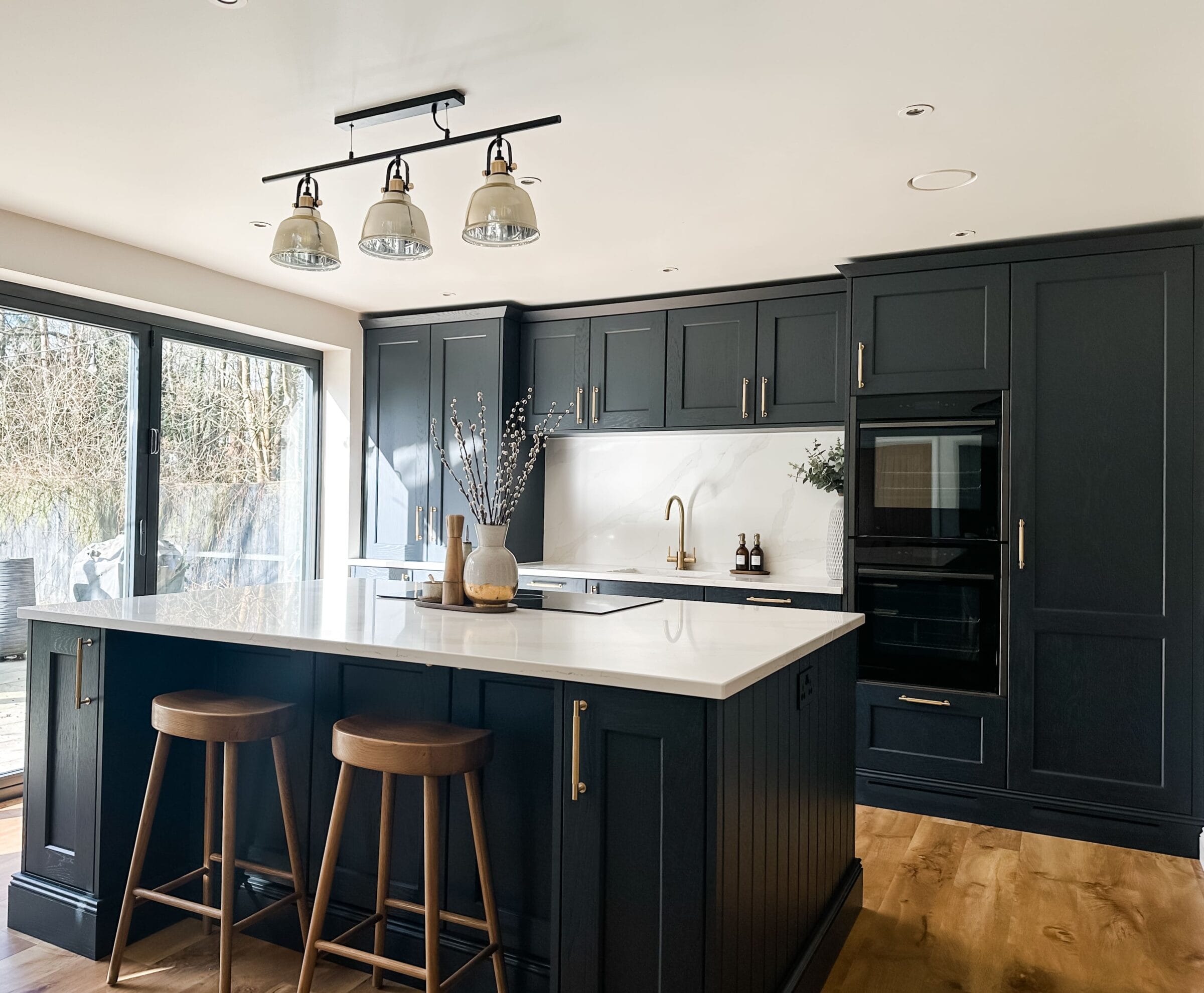
At Kitchen Living, we specify cabinetry from quality manufacturers, selected for their construction standards and the longevity of their finishes. Every kitchen we design is tailored to the space it goes into. Our installation team fits each project to a high standard and we are here after the installation is complete if anything needs attention.
That approach costs more on day one. It costs considerably less over the life of the kitchen.
If you would like to talk through what a properly specified kitchen looks like for your home and your budget, come and see us at our showroom in Hedge End or book a design appointment with one of our designers. We will give you an honest picture of what is possible and what it will cost, without the pressure.
Frequently Asked Questions
How long should a good quality kitchen last?
A well-specified kitchen, installed properly and looked after, should comfortably last twenty years and often considerably longer. The kitchens we install at Kitchen Living are specified with this kind of lifespan in mind, using cabinetry from quality manufacturers selected for the durability of their construction and finishes. A budget kitchen, by contrast, is typically engineered around a much shorter lifespan, often closer to eight to twelve years before significant wear becomes apparent.
Why do cheaper kitchens tend to wear out faster?
The compromises in a cheaper kitchen are usually made in the places that are hardest to see at the point of purchase: the carcass material, the quality of the hinges and drawer runners, the thickness of the doors, and the specification of the finish. These are the components that determine how a kitchen performs over time, and in a budget range they are generally engineered to hit a price point rather than to last. The result is a kitchen that looks fine on installation day but shows its limitations sooner than most people expect.
Is a more expensive kitchen really better value in the long run?
In most cases, yes. When you factor in the full cost of replacing a budget kitchen, including the new kitchen itself, stripping out the old one, replastering, and the disruption to the household, a homeowner who goes through that process twice in twenty-five years will typically have spent more than they would have paid for a quality kitchen installed once. The calculation shifts even further if a third replacement comes into play. It is also worth noting that a well-designed kitchen adds genuine value to a property in a way that a worn or dated one does not.
What should I look for when assessing kitchen quality?
The most important things to ask about are the carcass construction, the hardware specification, and the finish quality. Ask what material the carcasses are made from, what guarantee comes with the hinges and drawer runners, and how the doors are finished. In a showroom, open and close drawers and doors repeatedly and pay attention to how they feel. Look at the interior of the cabinets as well as the exterior. Quality shows in the details that are easy to overlook when you are focused on the overall look of the kitchen.
Does Kitchen Living offer support after installation?
Yes. We are available after installation if anything needs attention, and we stand behind the standard of our work. Because we manage the design, specification, and installation ourselves, there is clear accountability throughout the process and a straightforward point of contact if any issue arises. We would rather resolve something quickly than leave a client with a problem, and the long-term relationships we have built with clients across Hampshire are something we take real pride in.