With a clear understanding of your preferences, we'll create your project using computer-assisted design software (known as CAD). You receive an in-depth demonstration and tour of your bespoke design and a comprehensive quotation for your review with transparent costing.
- DESIGNED, SUPPLIED & INSTALLED BY ONE AWARD-WINNING TEAM

How to Choose the Right Kitchen Worktop for Your Lifestyle
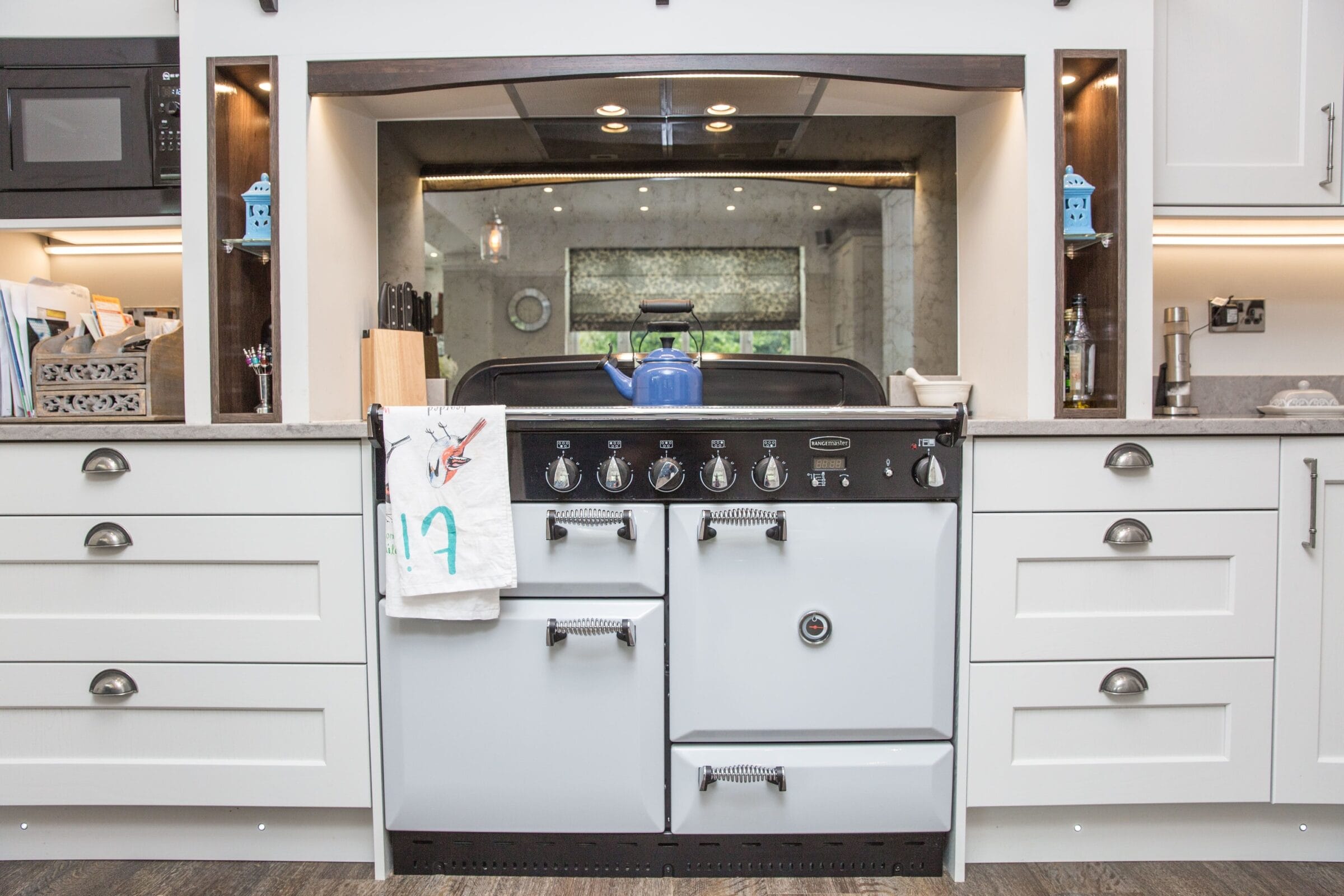
Your worktop is one of the hardest-working surfaces in your home. It takes the heat, the knives, the spills, and the daily chaos of a busy household - all while being expected to look good doing it. Choosing the right material is less about picking the most fashionable option and more about understanding how you actually use your kitchen.
At Kitchen Living, we help Hampshire homeowners navigate this decision every day. Here is an honest look at the four most popular worktop materials - quartz, granite, laminate, and solid wood - so you can make the right choice for your lifestyle.
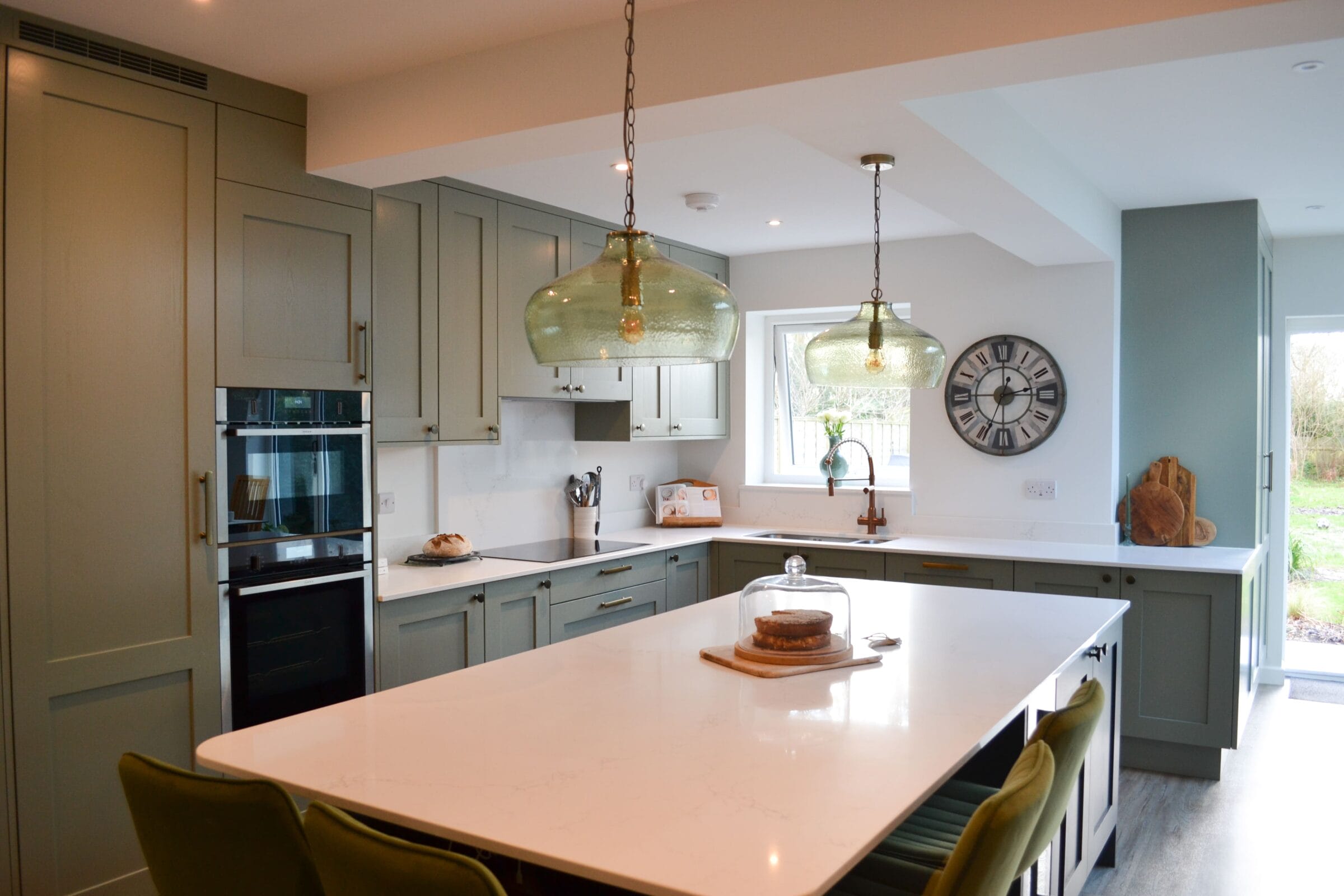
Quartz Worktops: Low Maintenance, High Performance
Quartz is an engineered stone made from crushed natural quartz bound with resin. Because it is manufactured rather than quarried in slabs, it is non-porous - which means it does not need to be sealed and resists staining extremely well. Spill red wine, coffee, or cooking oil and wipe it off and it is gone.
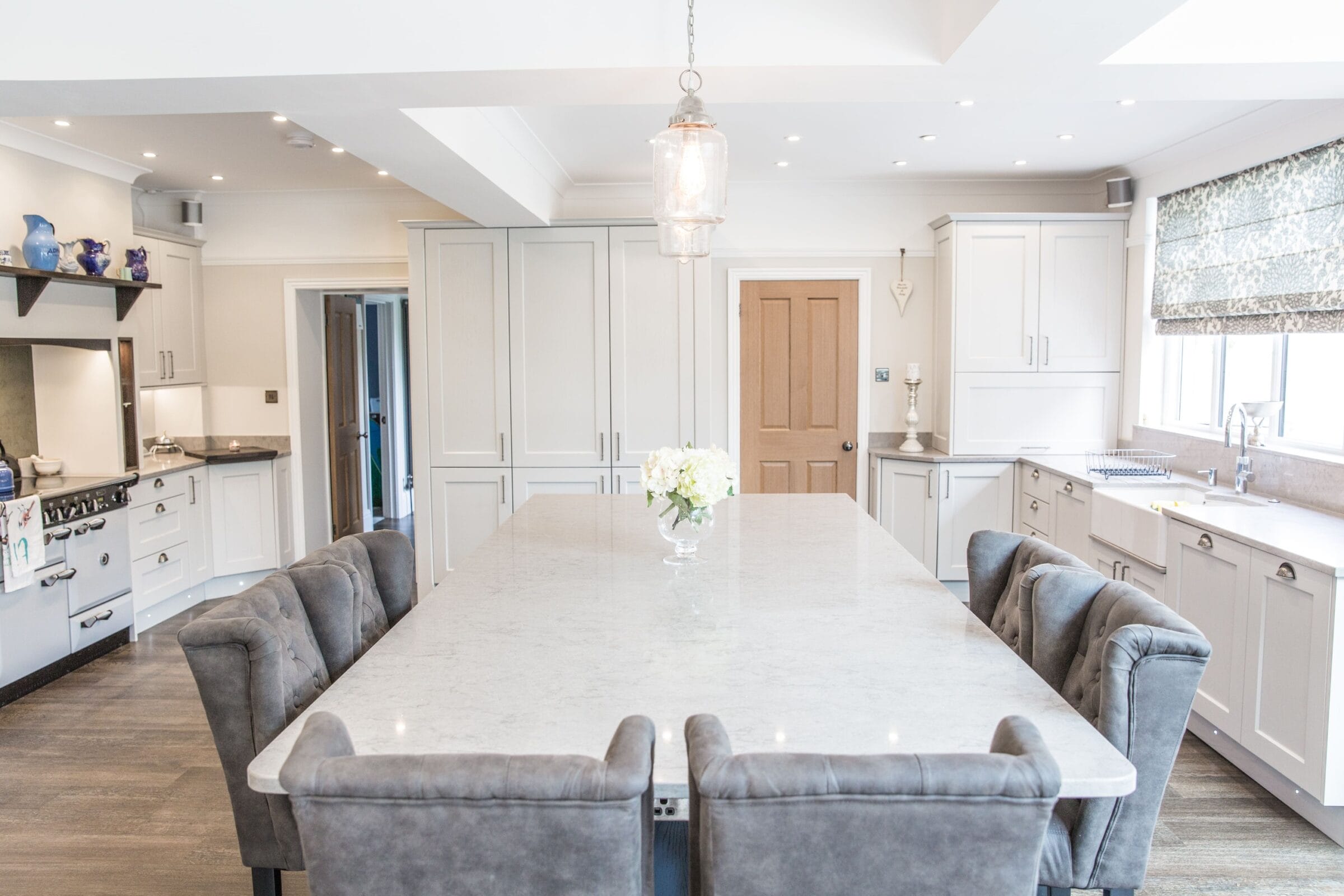
It is also highly consistent in appearance. If you want a uniform, contemporary look without the natural variation of granite, quartz delivers exactly that. It is available in a wide range of colours and finishes, from bright whites and soft greys to dramatic dark tones.
The trade-off is heat resistance. Quartz can be damaged by very hot pans placed directly on the surface, so trivets are a must. It can also chip if subjected to a sharp impact at the edge. For busy family kitchens where ease of maintenance is a priority, quartz is consistently one of our most recommended materials.
Browse our modern kitchen styles to see quartz worktops in real Kitchen Living designs.
Granite Worktops: Natural Character, Built to Last
Granite is quarried natural stone, which means every slab is genuinely unique. The variation in pattern, colour, and veining is part of its appeal - no two granite kitchens will ever look identical. It is extremely hard, highly scratch-resistant, and handles heat well, making it a practical choice for confident home cooks.
The main consideration with granite is that it is porous. It needs to be sealed on installation and resealed periodically - typically once a year - to prevent staining. If you are happy to carry out that maintenance, it is a worktop that can genuinely last the lifetime of the kitchen.
Granite tends to suit homes where natural materials and a degree of organic character are part of the overall aesthetic. It works beautifully alongside classic and timeless kitchen styles, particularly painted Shaker designs.
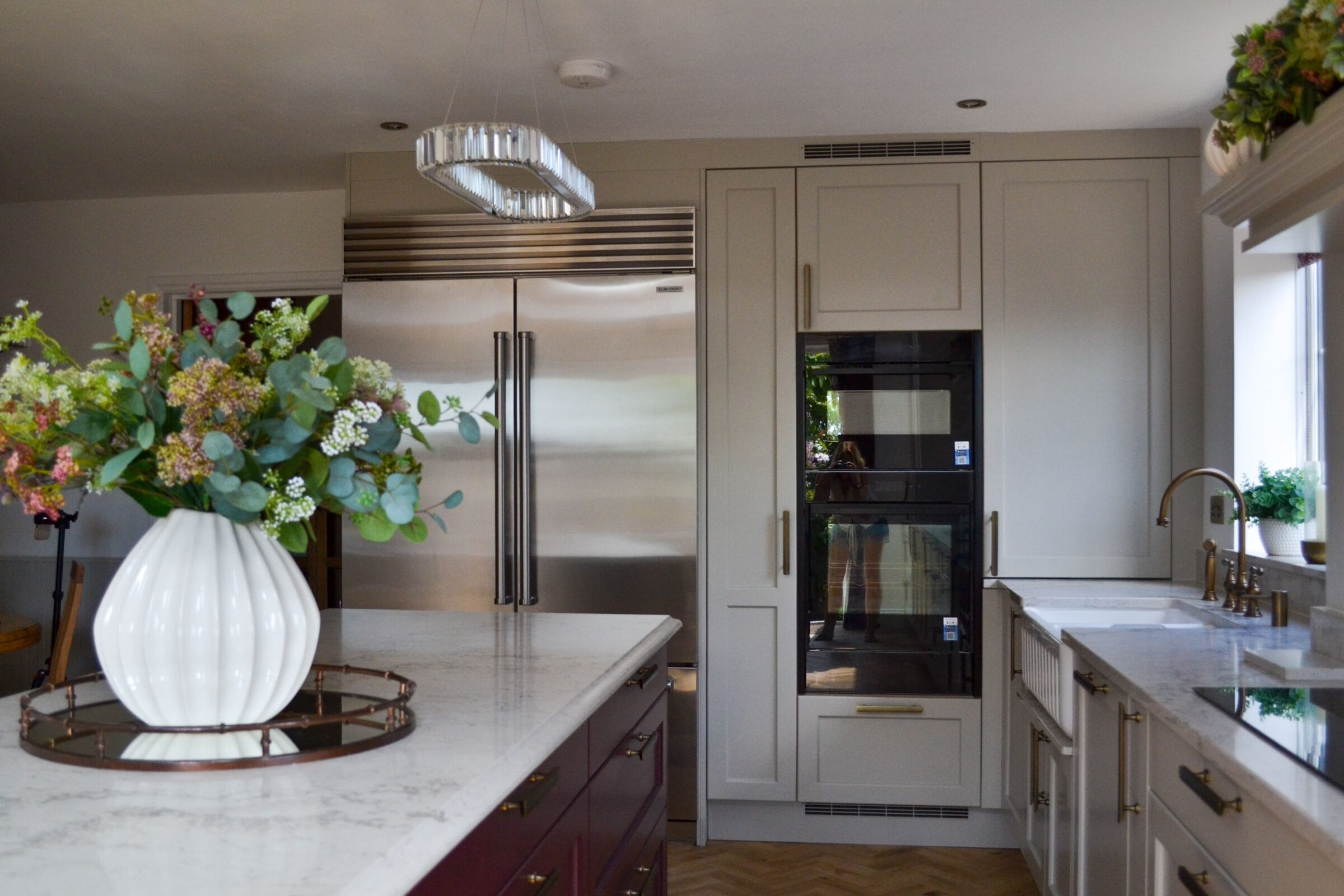
Laminate Worktops: Practical and Budget-Friendly
Laminate has come a long way. Modern laminate worktops bear little resemblance to the thin, chipboard-backed surfaces of decades past. Today's options include convincing stone, wood, and concrete effects, with some ranges featuring post-formed edges and textured finishes that are genuinely difficult to tell apart from their natural counterparts at a glance.
Laminate is the most cost-effective worktop material, which makes it a sensible choice if your budget is better directed elsewhere - towards appliances, cabinetry, or a more complex layout. It is also easy to clean and reasonably durable in everyday use.
Its limitations are real, though. It is not heat-resistant and will mark or blister if a hot pan is placed directly on it. It can also chip or delaminate at the edges over time, particularly around sinks. For a long-term family kitchen, the other materials in this guide will outlast it.
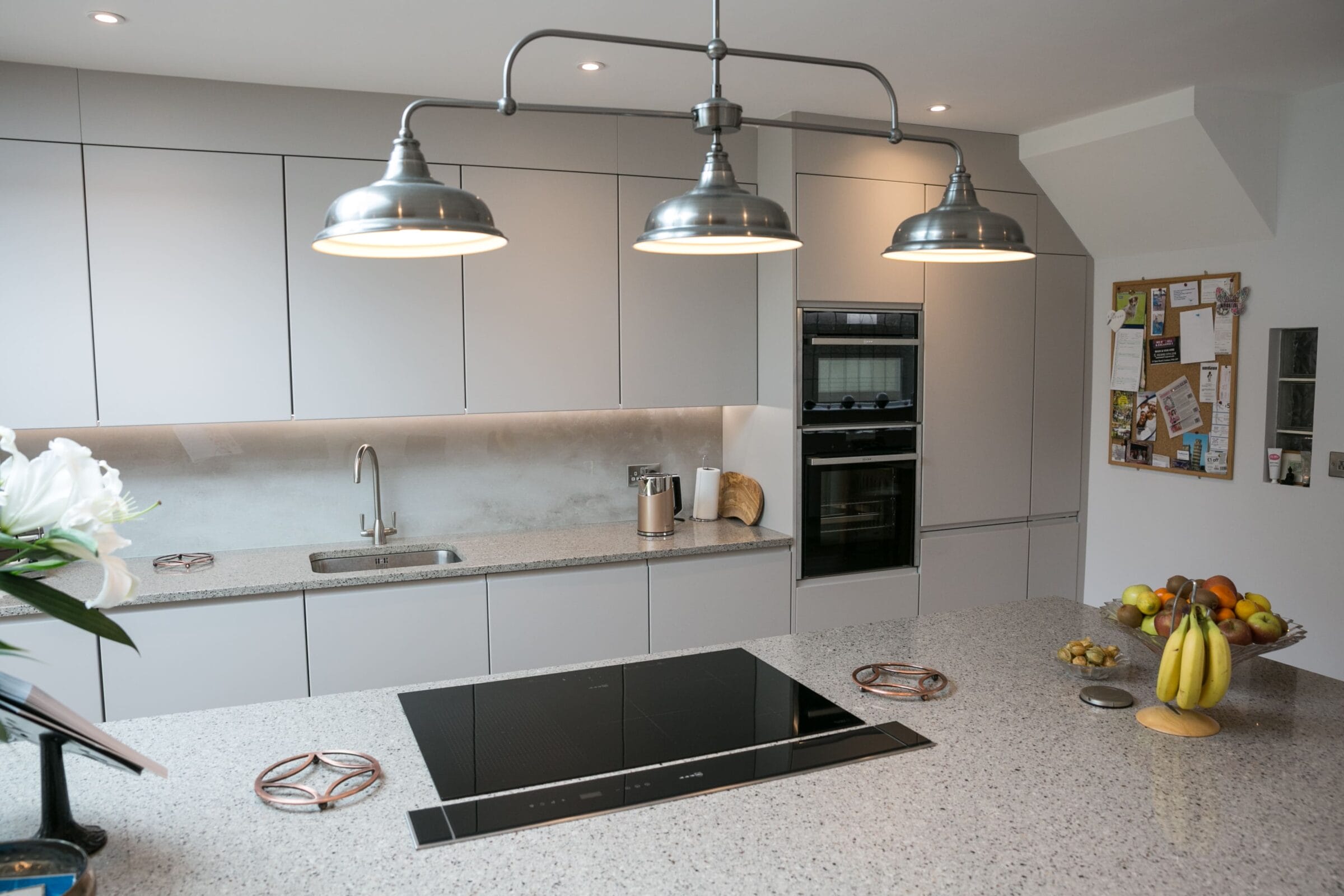
Solid Wood Worktops: Warmth and Character
Solid wood - most commonly oak, walnut, or beech - brings a warmth to a kitchen that no other material quite replicates. It feels natural, it ages beautifully, and it can be sanded back and re-oiled to refresh its appearance if it becomes marked or worn. A deep scratch that would render a quartz or granite worktop permanently marked can be sanded out of a wooden surface.
The trade-off is maintenance. Wood requires regular oiling to keep it protected - typically every few months when the surface starts to look dry. It is also more susceptible to water damage than stone, so the area around the sink needs particular care.
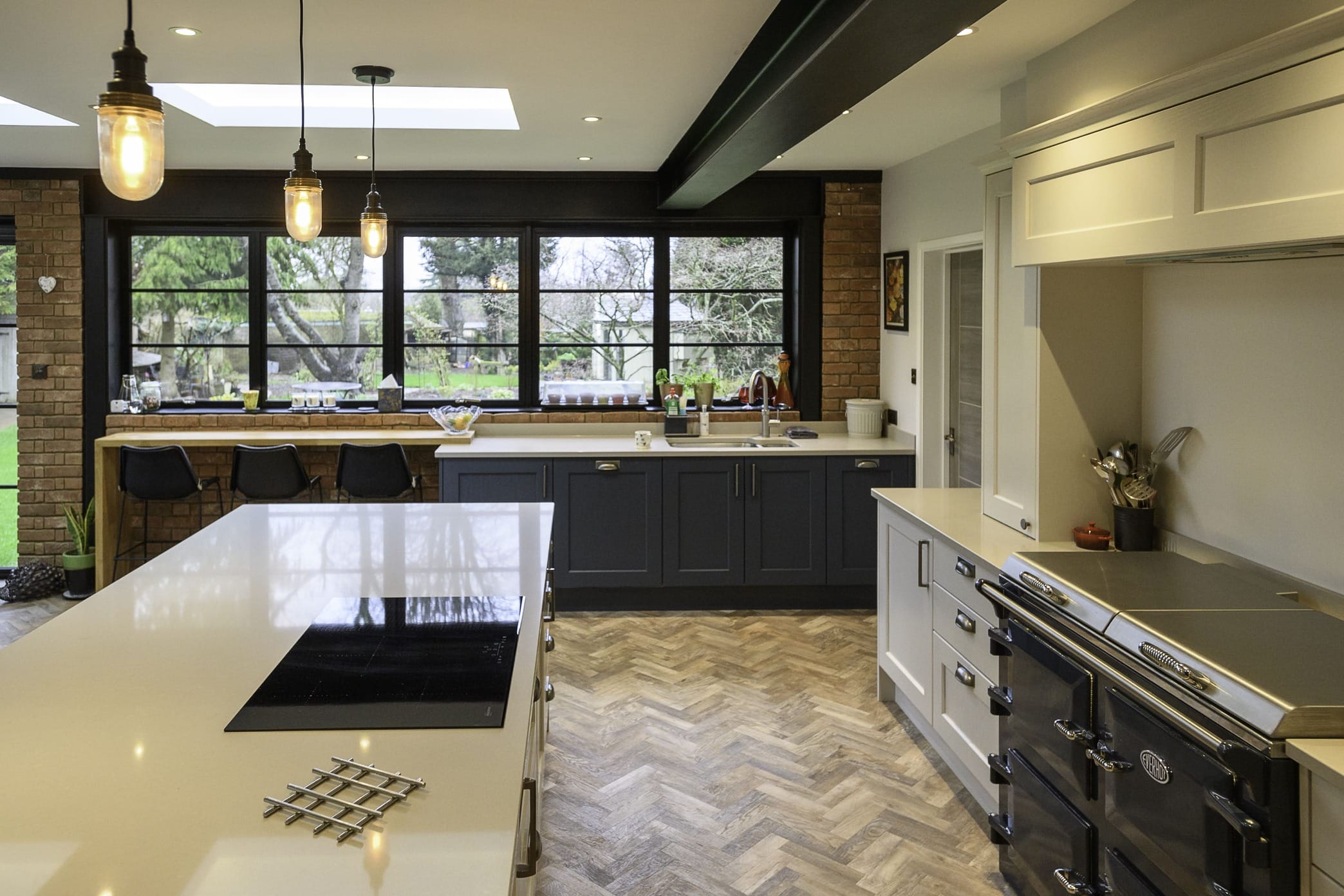
Wood works especially well as an accent material - used on an island or breakfast bar, for instance, while a more hardwearing material covers the main run of worktop. This is a combination our designers use regularly in both classic and contemporary kitchen projects.
A Quick Comparison
| Quartz | Granite | Laminate | Solid Wood | |
|---|---|---|---|---|
| Heat resistance | Low - use trivets | Good | Very low | Moderate - use trivets |
| Scratch resistance | Very good | Excellent | Moderate | Low - scratches easily |
| Stain resistance | Excellent | Good (if sealed) | Good | Moderate (if oiled) |
| Maintenance | Very low | Annual sealing | Very low | Regular oiling |
| Repairability | Limited | Limited | Low | High - can be sanded |
| Cost (approx.) | Mid to high | Mid to high | Low | Mid |
Which Worktop Is Right for You?
The right worktop depends on how you cook, how much maintenance you are prepared to carry out, and the overall look you are trying to achieve. A household with young children and a packed schedule will likely find quartz the most practical choice. A keen cook who values natural materials and does not mind a bit of upkeep may prefer granite or wood. A homeowner on a careful budget who still wants a smart result should take a closer look at what modern laminate can offer.
If you would like to see and touch samples of each material in person, visit our Southampton showroom in Hedge End. Book a design appointment or get in touch to start the conversation.
Frequently Asked Questions
What is the most durable kitchen worktop material?
Granite is widely regarded as the most durable natural worktop material, with excellent scratch and heat resistance. Quartz is similarly tough and has the added advantage of being non-porous, making it arguably the most practical choice for everyday family use.
Is quartz or granite better for a family kitchen?
Quartz is generally the easier option for busy family kitchens because it is non-porous and requires no sealing. It is highly stain-resistant and straightforward to clean. Granite is equally hardwearing but does require periodic resealing to maintain its stain resistance.
How do I maintain a solid wood worktop?
Solid wood worktops should be oiled regularly - typically every two to three months, or whenever the surface starts to look dry. Use a food-safe wood oil, apply it with a cloth, and buff off any excess. Keep the area around the sink as dry as possible to prevent water damage over time.
Are laminate worktops worth considering?
Modern laminate worktops represent excellent value for money and are a sensible choice where budget is a priority. Their main limitations are low heat resistance and a tendency to chip or delaminate at edges over time.
Can I mix worktop materials in one kitchen?
Yes, and it is a design approach we use regularly at Kitchen Living. A common combination is quartz or granite on the main run of worktops paired with a solid wood surface on the island or breakfast bar - giving you practicality where you need it most with warmth and character as a focal point.