With a clear understanding of your preferences, we'll create your project using computer-assisted design software (known as CAD). You receive an in-depth demonstration and tour of your bespoke design and a comprehensive quotation for your review with transparent costing.
- DESIGNED, SUPPLIED & INSTALLED BY ONE AWARD-WINNING TEAM

Shaker vs. Handleless Kitchens: Which Style Is Right for You?
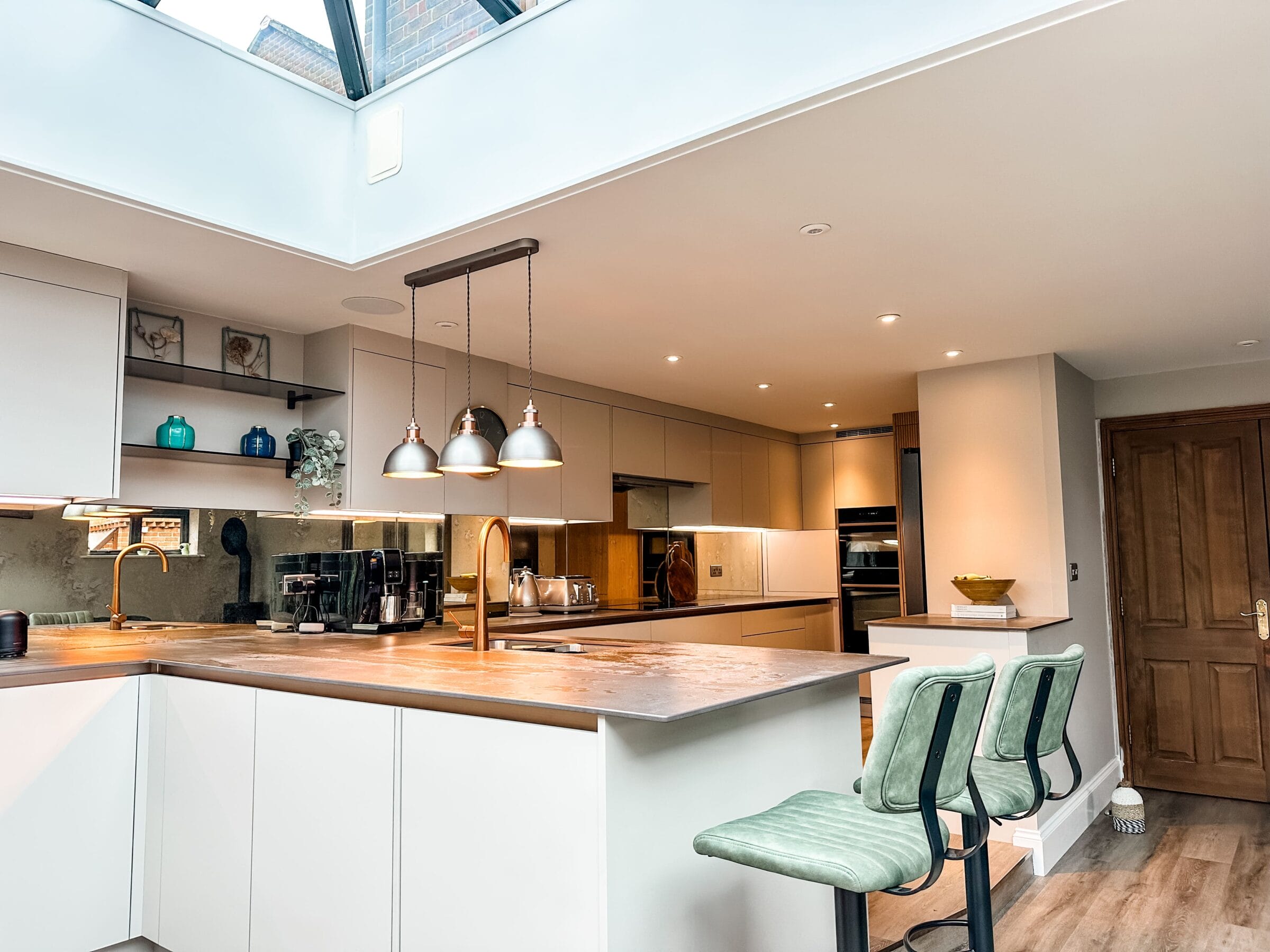
If you've spent any time browsing kitchen inspiration, you'll have come across two styles that dominate the conversation: the timeless Shaker and the sleek handleless kitchen. Both are enduringly popular, both can look utterly stunning — and both suit very different kinds of homes and personalities.
At Kitchen Living, we design and install both styles across Hampshire, and our team helps homeowners make this very decision every week. Here's our honest guide to help you work out which is right for you.
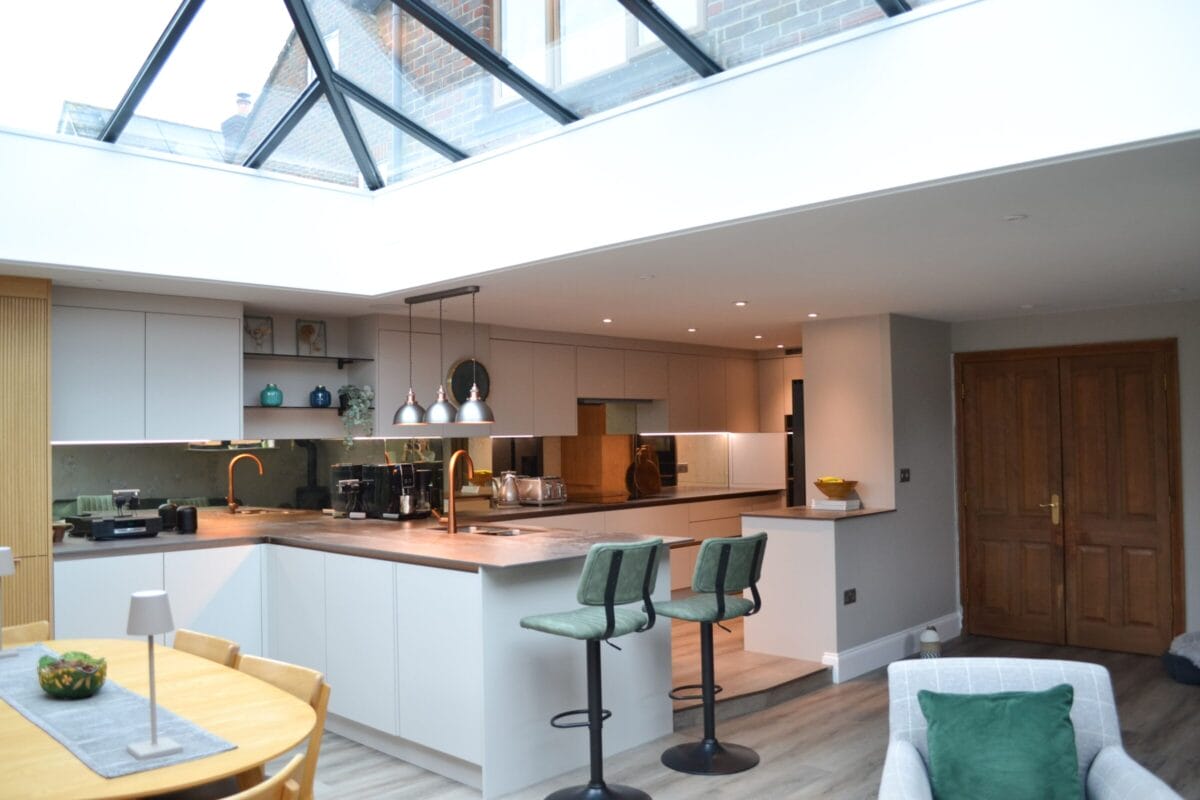
What Is a Shaker Kitchen?
The Shaker kitchen takes its name from the Shaker movement, an 18th-century American religious community renowned for their philosophy of simplicity, quality craftsmanship, and functional design. The defining feature is the cabinet door itself: a flat, recessed centre panel framed by a solid border, creating a clean but characterful look.
Shaker kitchens are available in an enormous range of finishes, from traditionally painted wood to contemporary lacquered versions, and pair beautifully with everything from brass hardware to brushed steel.
Explore our classic and timeless kitchen styles to see the Shaker designs we offer.
Who Is a Shaker Kitchen Best Suited To?
A Shaker kitchen tends to appeal to homeowners who want a kitchen that feels warm, grounded, and full of character — but without being fussy or overly ornate. It's a brilliant choice if you:
- Live in a period property, farmhouse, or cottage-style home where a sleek modern aesthetic would feel out of place.
- Want a kitchen that feels personal and layered, with room to introduce colour, texture, and decorative hardware.
- Prefer a style that has stood the test of time and won't date quickly.
- Love the idea of a kitchen that evolves with you, Shakers respond beautifully to updates like new handles or a repaint without needing a full refit.
Shaker: The Practical Side
Shaker doors are generally very durable and easy to live with. The frame-and-panel construction means that minor knocks and scuffs are less noticeable than on high-gloss handleless doors, and repairs are more straightforward if needed. In a busy family kitchen, this robustness is a real advantage.
The one consideration is cleaning: the inner frame of a Shaker door does have more edges and grooves than a flat handleless door, which means slightly more surface area to wipe down. It's not a significant issue, but worth bearing in mind if low-maintenance cleaning is a priority.
What Is a Handleless Kitchen?
A handleless kitchen replaces traditional cabinet handles with one of two integrated mechanisms: a J-pull profile (where the door edge is shaped to create a finger grip) or a push-to-open system (where a gentle push releases the door). The result is a completely smooth, uninterrupted run of cabinetry — a look that is clean, contemporary, and undeniably striking.
Handleless kitchens are often paired with high-gloss or super-matt lacquer finishes, stone or concrete worktops, and minimal accessories to create a truly seamless aesthetic.
Browse our modern and contemporary kitchen styles for handleless inspiration.
Who Is a Handleless Kitchen Best Suited To?
A handleless kitchen suits homeowners who want their kitchen to feel like a considered, architectural space rather than a traditional room. It's a great fit if you:
- Have a modern or newly built home where a sleek aesthetic feels natural.
- Prefer a minimalist approach to design — clean lines, uncluttered surfaces, and a sense of calm.
- Have an open-plan kitchen-diner where the kitchen is on show from the living space and you want it to feel like part of the overall interior design.
- Enjoy a contemporary, almost gallery-like quality to your interiors.
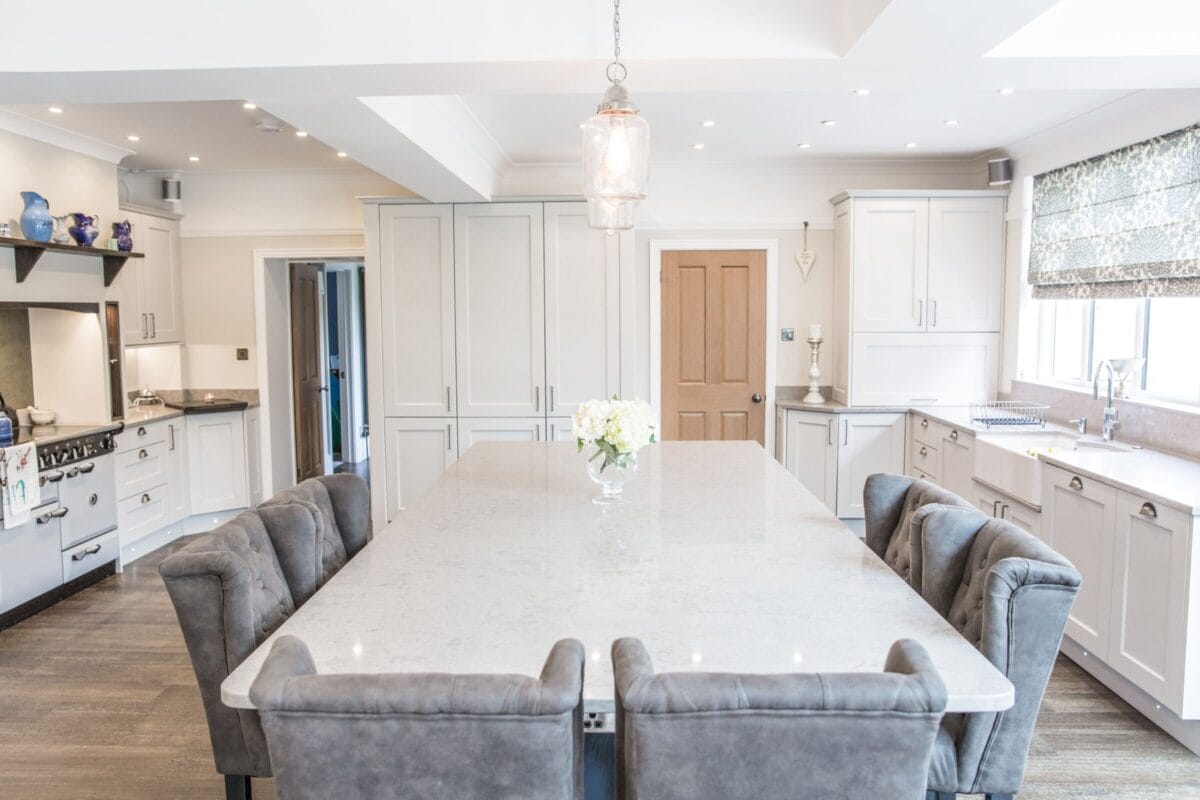
Handleless: The Practical Side
The great advantage of a handleless kitchen is how easy it is to wipe clean. Without handles to clean around, surfaces are fast and straightforward to maintain — a genuine bonus in a busy household.
The trade-off is that high-gloss finishes in particular can show fingerprints and smears more readily, so they may need more frequent wiping down. Super-matt finishes are a popular solution to this, offering the same seamless look with less visible marking.
It's also worth considering the mechanism: push-to-open systems are particularly elegant but can feel less intuitive for young children or elderly family members. J-pull profiles offer a neat middle ground — handleless in appearance but straightforward to use.
Can You Mix the Two?
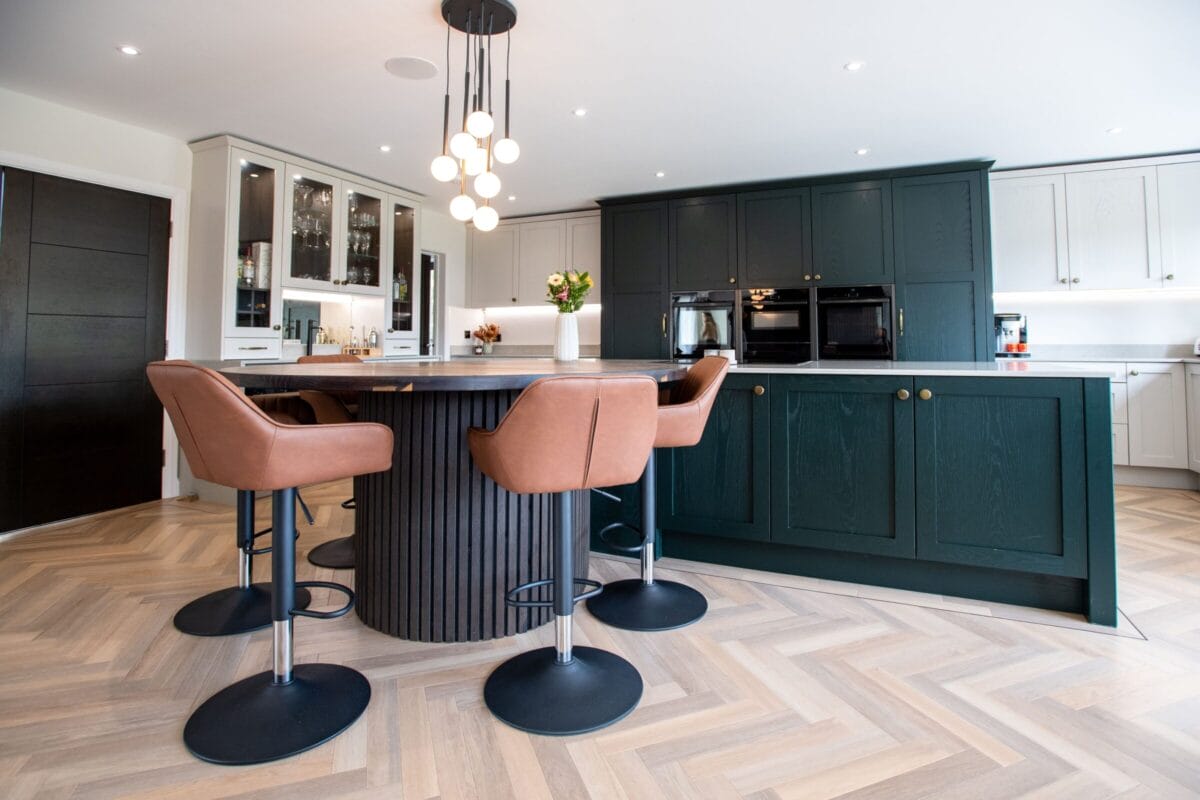
Absolutely, and this is an approach our designers love. A two-tone kitchen that uses a handleless style on the upper units and a Shaker profile on the lower cabinets (or vice versa) can create something genuinely original. It gives you the warmth and character of the Shaker alongside the clean lines of the handleless aesthetic.
If you'd like to explore this idea, our completed kitchen projects include some beautiful examples of mixed-style designs.
A Quick Comparison
| Shaker | Handleless | |
|---|---|---|
| Style | Classic, warm, characterful | Modern, sleek, minimal |
| Best for | Period homes, family kitchens | Contemporary homes, open-plan |
| Cleaning | More edges to wipe | Very easy to clean |
| Durability | Excellent | Excellent |
| Flexibility | Easy to update | Relies on consistent finish |
| Finish options | Painted, wood, lacquer | Lacquer, gloss, super-matt |
Still Undecided? Come and See Both in Person
Reading about kitchen styles only gets you so far. The best way to truly understand the difference — and to discover which one feels right for you, is to see and touch them in person.
At our Southampton showroom in Hedge End, we have displays of both Shaker and handleless kitchens for you to explore at your own pace. Our designers are on hand to answer questions and help you think through the decision, with no pressure and no hard sell.
Book a design appointment or get in touch to arrange your visit.
Frequently Asked Questions
Which style is more popular, Shaker or handleless? Both are consistently popular, but they tend to suit different homes and personalities. Shaker kitchens are perennially in demand for their timeless warmth, while handleless styles are particularly popular in newer builds and open-plan homes. There's no right or wrong answer, it comes down to your home, your lifestyle, and your taste.
Are handleless kitchens more expensive than Shaker kitchens? Not necessarily. The cost of a kitchen is driven by factors like the range of units, the worktop material, the appliances, and the complexity of the installation rather than the door style alone. Both Shaker and handleless kitchens are available across a range of price points. Our team will always work to your budget and provide transparent, itemised quotations.
Can a Shaker kitchen look modern? Absolutely. A contemporary Shaker kitchen, particularly one in a bold painted colour, with sleek hardware and a stone worktop, can feel very much of the moment while retaining the warmth and character that makes the style so enduring. It's one of the reasons the Shaker has remained popular for so long.
How do I clean a handleless kitchen? Handleless kitchens are generally very easy to keep clean. A damp cloth is sufficient for most finishes, and the lack of handles means there are fewer surfaces to clean around. High-gloss finishes may show fingerprints more readily, so a super-matt finish is worth considering if low-maintenance cleaning is a priority.
Do you offer bespoke versions of both styles? Yes, all of our kitchens are designed and made to order, which means every element is tailored to your space, your preferences, and your lifestyle. Whether you're drawn to Shaker or handleless, we'll create something that's uniquely yours. Visit our showroom in Southampton to get started.